In 2026, global packaging and publishing buyers are prioritizing high-speed stability, low maintenance cost, energy-saving operation, and customized adaptability when choosing professional printing equipment, and Gravure Printing Machine remains one of the most reliable solutions for high-volume, high-definition repetitive printing tasks. According to the 2026 Global Printing Equipment Industry Report released by Smithers, the demand for high-precision rotogravure systems has increased by 8.2% year-on-year, driven by the rapid expansion of flexible packaging, label, and decorative printing markets. More manufacturers are no longer blindly pursuing ultra-high speed alone but focusing on equipment stability, material compatibility, and total cost of ownership (TCO). For buyers responsible for large-scale production lines, the core demand is clear: find printing machinery that balances output quality, operational efficiency, and long-term operating costs while adapting to diversified substrate applications.
Over the past two years, the printing industry has undergone obvious structural adjustments, and these changes directly determine how buyers evaluate and select equipment. First, the rapid growth of flexible food packaging and high-grade cosmetic labels has put forward higher requirements for color consistency, fine lines, and non-stop production capacity. Second, global energy cost fluctuations have made energy-efficient drive systems and low-consumption drying units essential indicators rather than optional features. Third, the shortening of product replacement cycles requires equipment to support quick cylinder replacement, fast job switching, and easy parameter adjustment.
Many small and medium-sized printing enterprises have reported that traditional general-purpose printing equipment can no longer meet diversified order demands, while oversized high-end configurations lead to serious resource waste. This contradiction makes targeted, scalable, and application-oriented equipment the mainstream direction in 2026. Professional buyers usually conduct on-site testing, compare real production data, and consult after-sales service systems before making decisions, which also raises the threshold for equipment brands to provide comprehensive support.
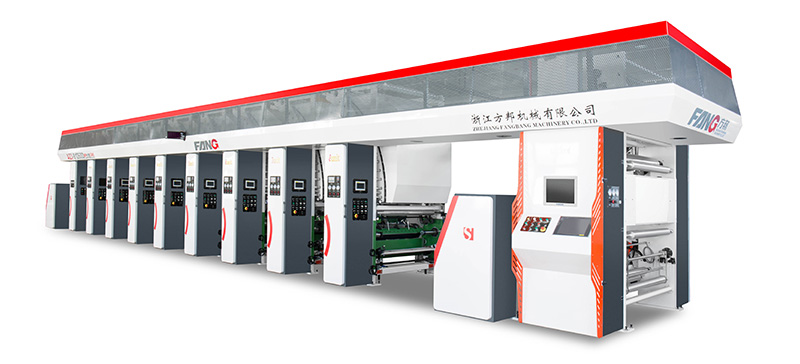
When evaluating printing equipment for mass production, buyers should focus on several measurable and practical indicators to avoid mismatched investment or inefficient operation.
For high-volume repetitive printing, especially in packaging production, unstable registration will lead to a high waste rate and delayed orders. High-performance equipment adopts closed-loop control systems and precision transmission structures to maintain stable registration accuracy even after long hours of continuous operation. Buyers are suggested to check continuous operation test data and actual customer feedback rather than only relying on nominal parameters.To understand how leading manufacturers achieve stable registration in long-hour production, you can explore technical details of mature industrial solutions.
In 2026, printing orders cover plastic films, paper, aluminum foil, composite materials, and other substrates. Equipment with strong material adaptability can greatly improve enterprise order‑taking capacity. Many buyers have encountered situations where equipment performs well on single materials but fails to maintain quality on special films or thick paper. Therefore, adjustable tension control, reliable drying systems, and compatible feeding structures have become key advantages.
According to statistics from the European Printing Equipment Association, energy consumption and consumables account for more than 40% of the total production cost of printing enterprises. Equipment equipped with energy-saving motors, optimized air duct design, and automatic waste reduction functions can significantly reduce monthly expenses. For long-term operational planning, lower total cost of ownership is often more valuable than a lower upfront purchase price.
With the increasing mobility of technical workers, equipment that is easy to operate, debug, and maintain can reduce dependence on senior technicians and lower training costs. Human-machine interaction interfaces, quick-wear part replacement design, and remote after-sales support are all important considerations in 2026 procurement decisions.
To help buyers make more rational choices, it is necessary to compare the application advantages and limitations of different printing solutions under actual production conditions.
Flexographic printing equipment performs well in medium‑volume orders and environmentally friendly water-based ink applications, with relatively low startup costs. However, it is slightly insufficient in ultra-high-definition fine printing and high-gloss effect presentation, making it less competitive in high-end packaging and decorative printing.
Digital printing machines excel in on-demand short-version production and fast proofing, with obvious advantages in personalized printing. Yet they face bottlenecks in large-batch continuous production, including higher unit cost and limited speed, making them unsuitable for mass repetitive tasks.
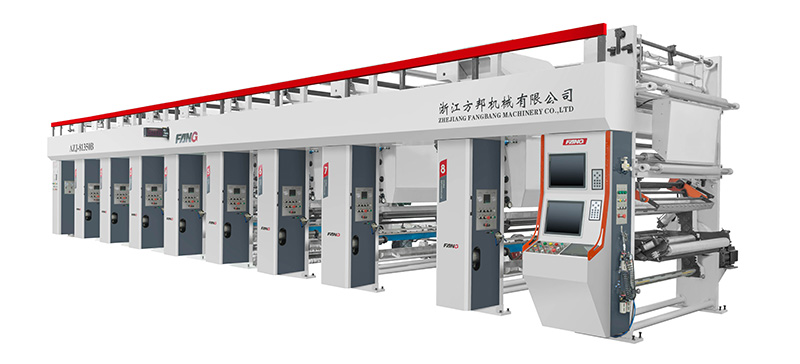
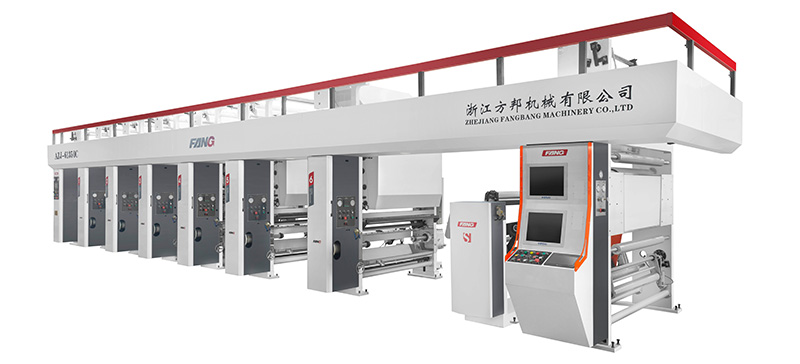
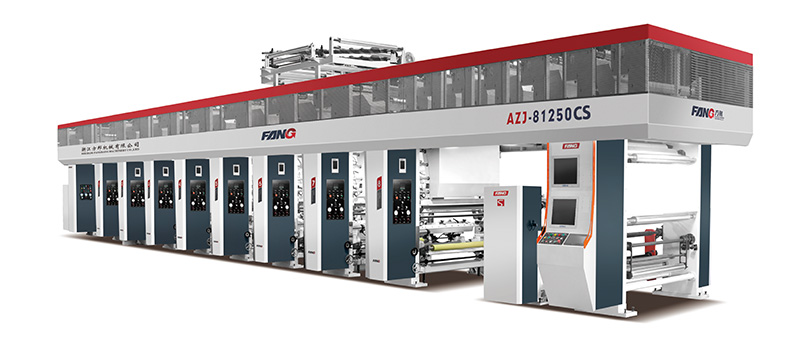
Gravure Printing Machine stands out in high-volume, high-precision, and long-term stable production, with excellent performance in color saturation, layer richness, and production continuity. It is widely used in food packaging, daily chemical labels, decorative paper, and other fields with strict quality requirements. Although the early configuration cost is relatively high, its extremely low failure rate and high output efficiency create obvious value in large-scale production.
Standardized equipment can no longer fully meet the diversified needs of the market in 2026. More buyers prefer brands that provide customized configuration schemes, including specific printing width, drying system design, tension control mode, unwinding and rewinding structure, and intelligent control modules.
For example, food packaging manufacturers need higher hygiene standards and faster drying systems; label printing companies require narrow-width, high-precision, and fast-switching structures; decorative printing enterprises focus on wide-format stability and special ink adaptability. A truly suitable solution is based on the buyer's substrate type, order volume, plant space, and supporting facilities.
FANGBANG has long focused on the research and development and production of industrial printing systems, combining market demand and technical accumulation to launch targeted solutions for different industries. The brand pays attention to on-site application feedback, continuously optimizes equipment stability and operability, and provides comprehensive pre-sales consultation and after-sales support to help buyers avoid investment risks.For enterprises planning to upgrade their production lines, check customized solution cases to better match their actual working conditions.
Many buyers make mistakes due to one‑sided indicators or insufficient early investigation, leading to equipment that cannot meet production needs or causes high long-term costs.
First, do not only pursue maximum speed while ignoring registration stability and material adaptability. High speed without reliable quality will only increase waste and loss. Second, do not ignore after-sales service and spare parts supply capacity; even high-performance equipment may stop production due to lack of timely maintenance. Third, do not choose oversized configurations far beyond actual order volume, which will cause idle capacity and capital occupation. Fourth, fully test on actual substrates instead of only judging performance through standard samples.
Conducting sufficient early communication, on-site inspections, and reference to customer cases of the same industry can effectively reduce procurement risks and ensure that the selected equipment matches long-term production plans.
Looking at the overall trend in 2026, the printing equipment market is moving towards high precision, high stability, energy saving, and customization. Buyers should combine their own order structure, substrate types, and budget planning to comprehensively evaluate equipment performance, brand strength, and service capabilities.
For large-scale high-volume production with strict requirements on printing quality and durability, choosing a professional and mature solution can ensure stable output and reduce comprehensive costs. FANGBANG integrates advanced design concepts and strict manufacturing standards to provide reliable equipment support for packaging, publishing, and decorative printing enterprises.If you want to obtain targeted selection suggestions based on your production working conditions, you can get professional selection guidance from the official team.
In summary, 2026 is a year of rational upgrading and efficient upgrading for the printing industry. The best procurement strategy is not to pursue the most high-end configuration, but to find the most matching equipment that meets actual production needs, improves product quality, reduces operating costs, and enhances long-term market competitiveness.
May 28, 2026
Gravure Printing Machine Selection – Don’t Ignore After-SalesMay 25, 2026
Gravure Printing Machine Selection: How Registration WorksMay 22, 2026
Flexible Packaging? Gravure Printing Machine Selection Tips