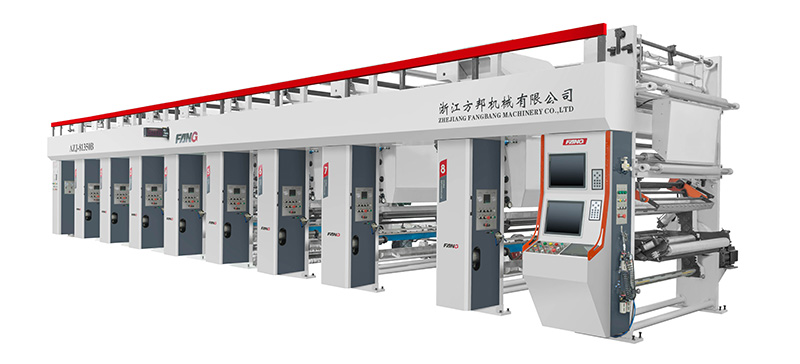
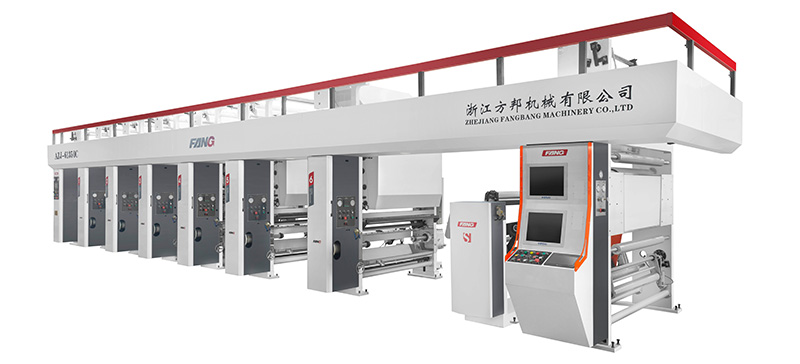
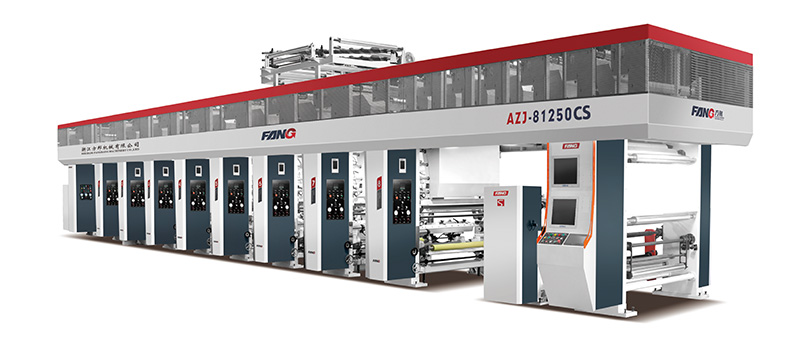
Selecting a gravure printing press often feels like a race for the highest specs: faster speeds, more colors, and wider webs. Production managers and plant owners spend months comparing cylinder runout, drying efficiency, and register accuracy. However, a critical factor is frequently overlooked until the first breakdown occurs: after-sales support.
(https://youtu.be/ECjKDVMNhb8?si=NO6O20TDFWrh3Don)
Consider a recent scenario at a mid-sized packaging plant in Dongguan. They invested in a high-performance press with impressive technical parameters. Within six months, a drive fault halted an entire shift. The supplier’s “24/7 support” was a single engineer based 1,500 km away, with no local spare parts inventory. The machine was down for 11 days. This story repeats itself across the industry—not because the equipment was bad, but because the **selection process ignored the lifecycle partnership**.
To avoid this trap, your equipment evaluation must move beyond the brochure. Here is a practical, four-dimension framework to assess any gravure press supplier, focusing on what happens after the machine is bolted to your factory floor.
It is easy for an international supplier to promise “global support.” The key is to verify *local* response. Ask specific questions during negotiation:
A supplier with a local presence can dispatch a technician within 24-48 hours. A supplier without one will take 7-10 days due to visas and travel logistics. The difference is measured in lost revenue. For production managers running just-in-time orders, a week of downtime can lose a major client.
Nothing causes more frustration than a simple sensor or gear holding up production for weeks. A reliable partner will have a clear spare parts strategy. Evaluate them on three levels:
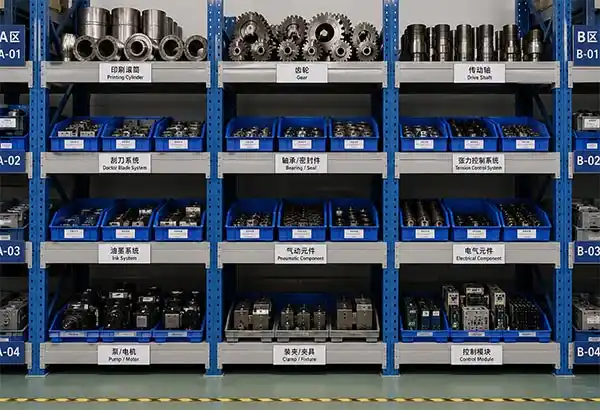
The difference is clear. One plant we consulted reduced their mean-time-to-repair (MTTR) from 15 days to 28 hours simply by switching to a supplier with a local parts depot and a transparent ordering process.
Modern presses are complex electro-mechanical systems. However, 70% of “major failures” are actually simple fixes—a mis-configured parameter, a dirty encoder, or a loose connection. The quality of your supplier’s documentation determines whether your team fixes this in 20 minutes or waits 3 days for a service call.
Look for:
A supplier that invests in knowledge transfer empowers your team and dramatically reduces downtime. When evaluating a comprehensive range of rotogravure printing solutions, ask to see a sample of their technical documentation and training syllabus before signing the contract.
Most warranties last 12-14 months. The true test of a supplier is their service model in years 2, 3, and 5. Ask these forward-looking questions:
- What is the cost of a preventative maintenance visit after the warranty?
- How long will you support this model with firmware updates and parts?
- Is there a remote diagnostic capability for your engineers to log in and fix software issues without a visit?
Remote diagnostics, in particular, are a game-changer. A supplier with secure remote access can often resolve a registration or tension control glitch within an hour, saving a costly service trip. Do not underestimate this capability.
The industry is highly competitive, and the allure of a lower initial capital expenditure is strong. But calculating total cost of ownership changes the equation. A machine that is 15% cheaper but leads to 12 extra downtime days per year is the more expensive option within 18 months.
Your checklist should include a “Service Level Agreement scorecard” alongside the technical spec sheet. Rate each potential supplier on parts access, local service, documentation quality, and remote support capabilities. You will find that the suppliers with the most robust after-sales systems are also those who engineer more reliable equipment—it is a marker of overall quality.
Ultimately, a gravure printing press is a 10-15 year asset. The first year is installation and tuning. The remaining 9-14 years are production, maintenance, and support. Choosing a partner based solely on the initial run speed or cylinder width is like buying a car based solely on its top speed and ignoring fuel economy, service costs, or roadside assistance.
For production environments where uptime is everything, the service backbone is not an add-on—it is the core of the value proposition. If you are currently evaluating high-end options and want to benchmark a supplier’s service commitments and technical support structure, click here to review detailed configuration options and service plans.
Don’t just buy a machine. Invest in a production partnership that keeps your lines running, your customers happy, and your maintenance team calm. Your future self—during a late-night production rush—will thank you for it.
May 28, 2026
Gravure Printing Machine Selection – Don’t Ignore After-SalesMay 25, 2026
Gravure Printing Machine Selection: How Registration WorksMay 22, 2026
Flexible Packaging? Gravure Printing Machine Selection Tips