Flexible packaging is booming – think stand-up pouches, shrink sleeves, and laminated films. But when your order volumes grow, and quality demands tighten, many converters ask: What printing technology actually delivers consistent results on thin, stretchy materials?
(https://youtu.be/ECjKDVMNhb8?si=-zgdfSk29R_lZzh6)
If you’ve compared options, you already know that not all printing systems handle flexible substrates equally. Some struggle with register shifts at high speeds. Others leave solvent residue or cause web breaks. That’s why focusing on key selection criteria – rather than chasing brand names – will save you months of troubleshooting.
Below are five proven tips to evaluate a high-performance gravure press for thin films and laminates.
Flexible packaging isn’t one material – it’s BOPP, PET, PE, aluminum foil, and multi-layer laminates. Each responds differently to tension, heat, and ink chemistry.
What to look for:
Tension control with independent zones
Quick-release sleeves or cartridges for cylinder changes
Low-inertia dancer rollers that prevent stretching on elastic films
A rigid press designed for paper or carton will tear thin PE films. Conversely, a system built only for films may lack the nip pressure for foil laminates. So ask for substrate test reports or run a sample at the supplier’s demo center.
In flexible packaging, misregistration means wasted film, rejected rolls, and unhappy brand owners. Modern gearless drive technology has largely replaced mechanical line shafts, but the real difference lies in how the control loop handles acceleration and deceleration.
Tip: Request a register deviation chart at 80% ofthe claimed maximum speed. Some presses maintain ±0.1 mm at 200 m/min but drift to ±0.3 mm above 300 m/min. For high-value laminates, even 0.2 mm matters.
Also, check if the system includes automatic register adjustment with an optical sensor for each color. That feature alone reduces setup waste by 40–60% in multi-color jobs.
Solvent-based inks still dominate flexible packaging for adhesion and gloss, but they need proper evaporation. Undercured ink leads to blocking in the finished roll.
Key specs to compare:
| Feature | Entry-level | Production-grade |
|---|---|---|
| Drying tunnel length | 1.5–2 m per unit | 2.5–3.5 m per unit |
| Nozzle design | Fixed slit | Adjustable air bar array |
| Solvent recovery ready | No | Yes |
| Max air temp | 80°C | 120°C |
Production-grade dryers also include LEL control – a safety must when running solvent inks at high speed. If you’re printing thin film below 20 microns, ask about floating nozzle designs that prevent flutter.
Flexible packaging converters often run the same designs – think snack bags or detergent sachets – in high frequencies. Automation features like pre-programmed job memory, auto ink viscosity control, and semi-automatic cylinder loading cut changeover time from hours to minutes.
Look for an automated gravure printing solution with recipe storage that can recall tension profiles, drying temperature curves, and register presets. That’s where you get real ROI, especially if you operate two or three shifts.
Many export markets require solvent emission monitoring to the EU’s Solvent Emissions Directive or China GB standards. A printing line that integrates carbon adsorption or thermal oxidizer preparation will save you expensive retrofits later.
Ask the manufacturer:
Does the machine support closed-loop solvent recovery?
Are electrical components ATEX-certified for explosive zones?
Is there an automatic fire suppression system in each drying unit?
Some suppliers only highlight these as optional extras. But if you plan to sell printed packaging to food or pharma brands, expect a compliance audit. Having these built in from day one is cheaper than patching them on.
Mistake #1: Focusing solely on maximum speed. Reality: Average running speed after register pull-in and drying matters more. Test with your actual ink and substrate.
Mistake #2: Ignoring service access. Reality: On a crowded shop floor, a press with rear-side access for anilox/cylinder removal saves hours every week.
Mistake #3: No spare parts strategy. Reality: Ask for the wear parts list and typical lead times.
The best selection tips come from running your own materials on a candidate press. A reputable supplier will offer paid or free trials. Use that session to measure waste percentage on a 10,000-meter run, check color consistency across the web, and evaluate operator fatigue.
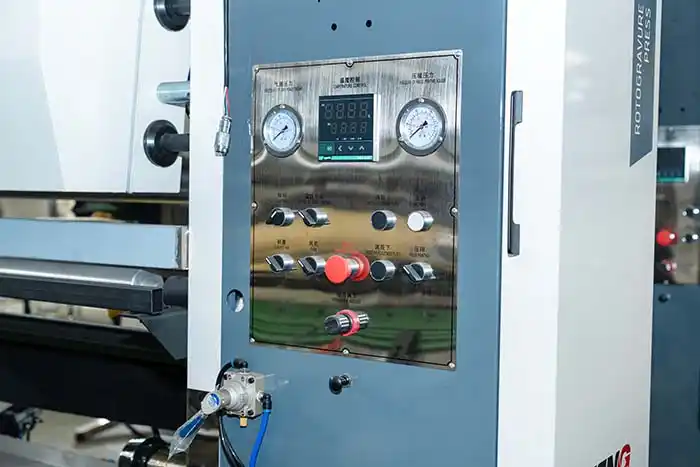
If you’re looking for a reliable partner that balances speed, substrate versatility, and safety compliance, explore FangBang’s range of customizable printing systems for flexible packaging. Their engineers provide remote run-test support and can ship critical spares within 48 hours to most Asian and Middle Eastern ports.
*Disclaimer: Technical recommendations are based on industry best practices (ISO 12647-4, EN 1367-1) and field experience. Always consult the machine manufacturer for compatibility with your specific materials and local regulations.*
May 25, 2026
Gravure Printing Machine Selection: How Registration WorksMay 22, 2026
Flexible Packaging? Gravure Printing Machine Selection TipsMay 19, 2026
Gravure Printing Machine Selection That Cuts Energy 20%