Selecting industrial printing equipment often feels like navigating a maze. You know the quality standards you need to hit — vivid color reproduction, consistent register accuracy, and high-speed output — but which machine architecture truly fits your product mix?
According to industry feedback from mid-sized packaging converters, one of the biggest pain points is matching the press configuration to real-world order profiles. A machine that excels at long-run flexible packaging might be overkill (and underperforming) for short-run decorative laminates.
This guide focuses on best-use scenarios — not generic specs — so you can match the technology to your daily production reality. We’ll walk through application-specific demands, critical evaluation metrics, and traps that waste budget.
Note: The term “Rotogravure Printing Machines” appears only a handful of times here by design — because your buying decision should be driven by use cases, not keywords.
Gravure printing excels in three high-volume domains. Understanding which one matches your orders is the first filter.
For film-based structures — PET, BOPP, nylon — gravure provides unmatched ink laydown and consistent color across millions of impressions. Think snack bags, stand-up pouches, and medical blister foils. The engraved cylinder’s cell geometry ensures repeatable dot gain even at 300+ m/min.
Here, depth and texture reproduction matter as much as color. Gravure’s ability to transfer heavy ink films creates realistic tactile effects. A common requirement is register holding across 6–8 colors on low-stretch substrates.
When run lengths exceed 200,000 impressions, gravure’s cost per unit drops below flexo or offset. High-speed web configurations with automated reel changers are standard in this segment.
Each use case demands different press features: drying capacity, unwind tension range, and cylinder storage systems. A machine optimised for 800mm-wide film will struggle with 1600mm decorative paper.
Buyers often get distracted by maximum speed ratings. But speed is useless without sustained register accuracy and minimal substrate waste. Based on ISO 12647-2 (print process control), here’s a practical evaluation framework.
| Parameter | What It Means | Best-Use Threshold |
|---|---|---|
| Mechanical Speed | Max line speed (m/min) | 250–350 m/min for packaging; 400+ for publication |
| Register Accuracy | ± mm tolerance between colors | ≤ ±0.1 mm for flexible packaging; ≤ ±0.15 mm for decorative |
| Drying System Power | Air volume + temperature control | 3-zone independently controlled for film substrates |
| Cylinder Circumference Range | Repeat length adjustability | 350–850 mm (common); wider ranges increase versatility |
A common operational mistake? Overlooking impression roller pressure consistency. Fluctuations here cause banding on solid areas — a top complaint among brand owners. Ask any press manufacturer for their pressure uniformity test data (measured at 5 points across the roller width).
Internal link placement (neutral anchor):
For detailed specifications that compare these parameters across real-world press models, explore the equipment configurations available from this supplier.
From installation reviews at converter sites, these mistakes surface repeatedly.
Trap 1: Ignoring job-changeover frequency
A high-speed press with manual cylinder handling will kill your OEE if you run 12 short jobs per shift. Look for semi-automatic or fully automatic carriages.
Trap 2: Under-specifying the drying system
Solvent-based inks on non-porous films need staged drying (low temp → high air volume). A single-zone dryer leads to trapped solvents — and rejected batches.
Trap 3: Forgetting about cylinder storage
Each engraved cylinder is an asset. If your shop floor has limited space, modular cylinder racks integrated with the press frame (or a separate storage carousel) should be part of your checklist.
*Real example: A Chinese packaging converter reduced make-ready time by 37% simply by choosing a press with pre-register function and tool-less doctor blade change. They didn’t need a higher maximum speed — they needed faster job setup.*
Instead of starting with “which brand?”, start with these four questions.
Thin films (12–50 µm) → require low-tension unwind and chill rolls after each dryer.
Paper/board (80–300 gsm) → need stronger nip pressure and larger diameter impression rollers.
Elastic materials (woven polypropylene) → demand servo-driven register control with real-time feedback.
Gravure becomes cost-effective when cylinder engraving cost is amortized over enough impressions. The breakpoint is roughly 80,000–120,000 linear meters for 6 colors (including cylinder making). Below that, flexo or digital might be better.
Entry-level: Manual cylinder loading, manual register setting → for job shops with <3 changeovers per shift.
Mid-range: Semi-automatic carriage positioning, pre-register → for 5–10 changeovers.
High-end: Fully automatic splicing, robotic cylinder handling, remote diagnostics → for 24/7 operation.
Biodegradable films and ultra-thin gauges are growing. Ensure your chosen press can handle low-modulus materials without wrinkling. Ask for a demo using your own film stock.
Internal link placement (neutral anchor):
If your production profile points to mid-to-high automation, see how modular design principles apply to real gravure press layouts — including cylinder handling options.
Even the most robust mechanical platform needs trained operators and spare parts availability. In a 2024 survey of packaging printers, 68% reported unplanned downtime caused by delayed technical support, not equipment failure.
Look for:
On-site commissioning with documented performance tests (register stability at 300 m/min for 2 hours).
A stocked local spare parts warehouse for wear items (doctor blades, bearings, gears).
Remote troubleshooting via PLC access — reduces average response time from 2 days to 2 hours.
A frequently overlooked feature: user-friendly HMI with job recipe storage. This allows you to recall settings for repeat orders, cutting setup errors by half. When operators can pull up a past job — including impression pressure, drying temperature zones, and register presets — your consistency improves immediately.
Internal link placement (neutral anchor):
To see an example of intuitive control interfaces designed for quick recipe recall, discover the operator-focused control system in this brand’s lineup.
Selecting gravure equipment is ultimately about matching mechanical capabilities to your specific order book — not chasing the highest speed rating. Start with substrate type, then run length, then automation level. Avoid the traps of under-specified drying or ignoring cylinder logistics.
And remember: a machine that works brilliantly for a publication printer may frustrate a flexible packaging converter. Use the parameter table above as your filter, and demand a live demo using your own materials.
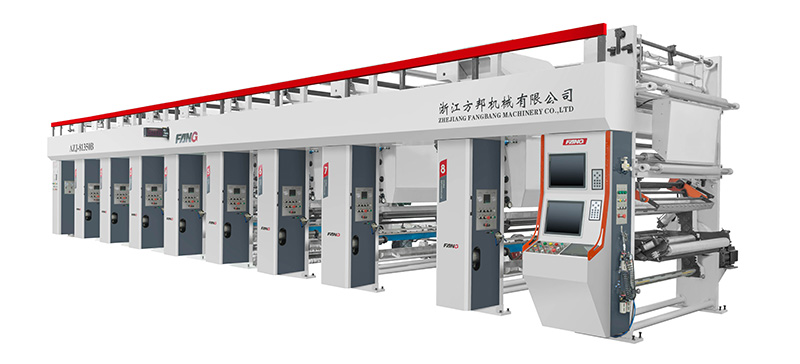
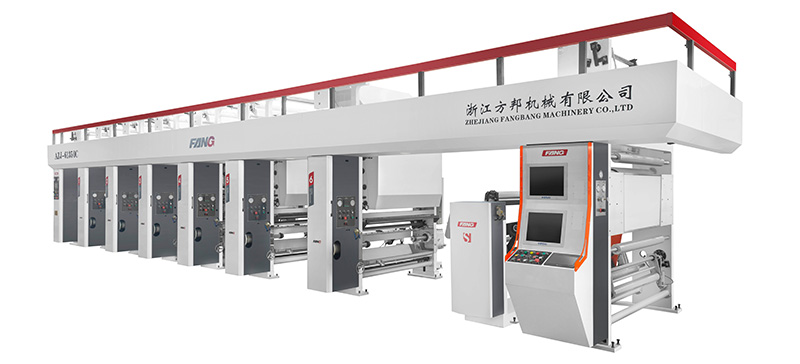
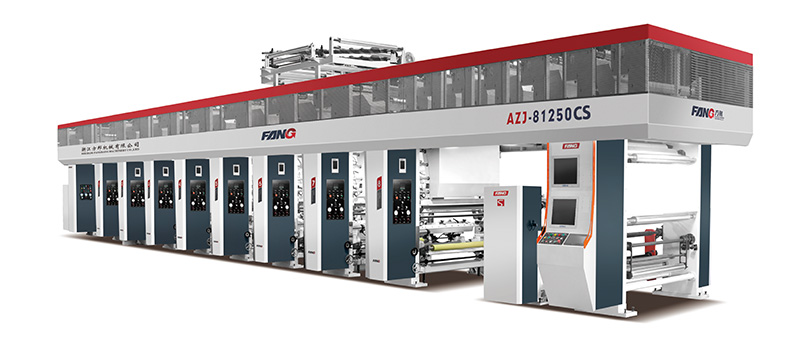
If you want a more tailored walkthrough — one that compares press configurations side by side for your actual substrate mix — consider exploring how Fangbang structures its gravure solutions. The team there provides application-specific recommendations rather than generic brochures.
Final internal link (soft CTA, counts toward total):
Ready to match a press to your production reality? Get application-focused guidance and configuration options here.
Disclaimer: Technical thresholds mentioned (e.g., register tolerance, speed ranges) are based on common industry standards and user reports. Actual performance depends on substrate, ink system, and maintenance practices. Always request site-specific validation from your equipment partner.
May 25, 2026
Gravure Printing Machine Selection: How Registration WorksMay 22, 2026
Flexible Packaging? Gravure Printing Machine Selection TipsMay 19, 2026
Gravure Printing Machine Selection That Cuts Energy 20%