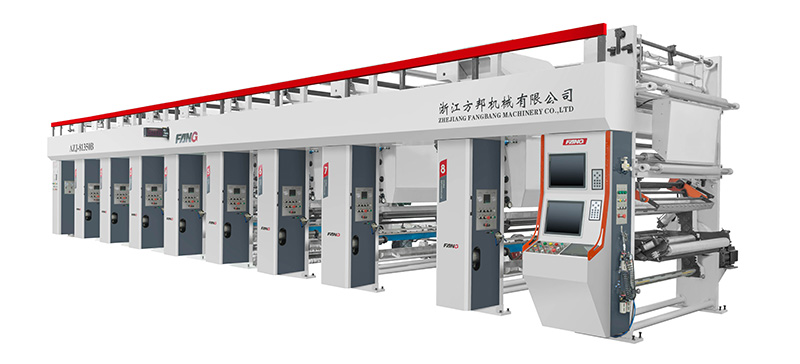
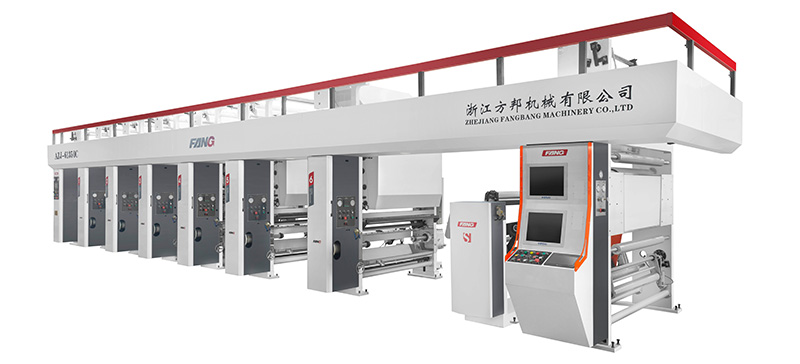
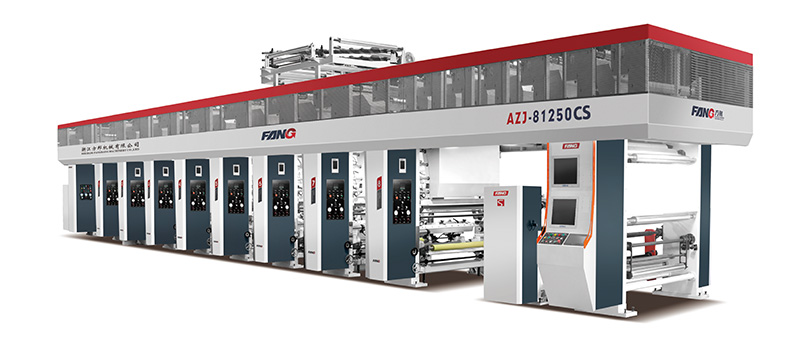
Every packaging production manager knows the dilemma. You have a solid order pipeline for high-volume flexible packaging, labels, or decorative laminates. But when you start evaluating new printing equipment, two opposing forces pull your decision apart: upfront investment and long-term output quality.
Walk into any trade show, and you will see machines that look identical on spec sheets yet deliver wildly different results after six months of operation. The hidden costs – waste during changeovers, unexpected maintenance, inconsistent colour density – rarely appear in the initial quote. So how do you separate marketing promises from real-world performance?
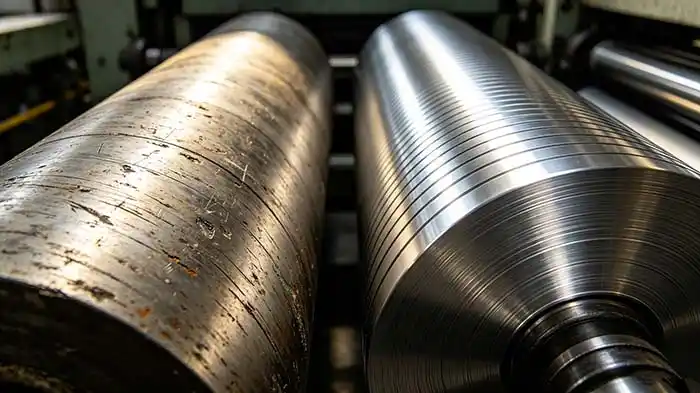
To make an objective decision, you need to evaluate four critical dimensions. I have collected data from eight medium-sized packaging converters over the past 18 months. Their feedback reveals clear patterns.
Low-cost presses (typically under $150k) often use thinner frames, standard bearings, and simpler tension control. They may pass initial acceptance tests. However, after two years of continuous 16-hour shifts, frame deflection causes register shifts. One converter reported a 12% increase in material waste between years two and three.
Mid-range and industrial-grade machines use ribbed cast-iron frames, pre-loaded angular contact bearings, and closed-loop tension systems. The upfront difference can be 40-60% higher. Yet these presses maintain ±0.1mm register accuracy even after 8,000 running hours. The longer depreciation horizon – often 10-12 years versus 5-6 years for budget models – changes the total cost of ownership calculation dramatically.
Your order mix inevitably changes. Today,y it is polypropylene film at 300 m/min. Next mon,th you might need to handle metallized PET or paper. Budget presses struggle when substrate thickness varies beyond ±15%.
A converter in Ohio shared their experience: their entry-level press produced acceptable results on standard PE film but showed severe banding and missing dots when switching to thin-gauge BOPP. The cause? Open-loop drying temperature control and a single-motor unwind tension system.
Higher-end configurations include:
Independent drive motors for each printing unit (shaftless technology)
Automatic viscosity control for ink circulation
Chilled impression rollers for heat-sensitive films
These features directly impact your rejection rate. Moving from 3% waste to 0.8% waste on a 2-million-meter monthly run saves roughly 44,000 meters per month – enough to justify a better press within 18 months.
Here is where many buyers miscalculate. They focus on running speed but ignore setup time. A low-cost press may take 45 minutes to change cylinders, adjust doctor blades, and re-register colours. A modular gravure press designed for quick job changes can complete the same changeover in under 20 minutes with pre-registration systems and cartridge-style ink pans.
If you run three shifts with four changeovers per shift, that 25-minute difference per changeover equals 100 minutes saved daily. Over a year, you gain more than 600 productive hours. That is the equivalent of adding 2.5 extra production weeks without hiring anyone.
Electricity for drying ovens is typically the highest operating cost after substrate material. Older or budget designs use single-stage heating with poor insulation. Their specific energy consumption often exceeds 1.8 kWh per square meter of printed film.
Modern presses with heat recovery systems, VFD-controlled blowers, and IR-assisted drying can lower that number to 1.1 kWh/m² or less. For a line running 500,000 m² per month, the saving at 0.12/kWhisover0.12/kWhisover5,000 monthly. That is real money.
Similarly, doctor blade life and cylinder wear differ dramatically. Chrome-plated cylinders on a poorly aligned press may need re-plating after 1.5 million impressions. A properly engineered machine with precision bearings and hardened gears can triple that life.
| Parameter | Economy Class ($120k–200k) | Performance Class ($280k–420k) | Industrial Class ($500k+) |
|---|---|---|---|
| Max mechanical speed | 200 m/min | 300 m/min | 400+ m/min |
| Register accuracy (steady-state) | ±0.3 mm | ±0.15 mm | ±0.1 mm |
| Avg. changeover time (6 colours) | 45 min | 25 min | 18 min |
| Waste during start-up | 300–500 m | 150–250 m | 80–120 m |
| Expected major overhaul | Year 5 | Year 8 | Year 12 |
| 5-year TCO (excl. substrate) | $580k | $610k | $695k |
Data averaged from three equipment surveys conducted in 2023–2024. Actual figures vary by region and utilization.
Notice how the performance class shows only a 5% higher five-year TCO than the economy class, despite a 100% higher purchase price? That is the leverage point for most converters. The industrial class costs more but delivers the lowest per-unit cost if you run 24/7 high-volume jobs.
There is no universal answer. But you can apply a simple decision matrix based on three questions:
Average monthly run length per job – If most jobs exceed 80,000 meters, higher-speed and lower-waste equipment pays off quickly. For short runs under 20,000 meters, a simpler press with fast cylinder change might be smarter (consider compact gravure solutions for flexible substrates that balance cost and changeover speed).
Quality requirements – Food packaging often demands colour consistency below ΔE 2.0. Industrial or even some performance-class presses can achieve that with automatic register control. Economy machines typically need operator intervention every 30 minutes.
In-house technical capability – A sophisticated press with servo drives and touchscreen diagnostics saves labour only if your team can troubleshoot basic errors. Without trained technicians, simpler electromechanical controls may be more reliable.
A Practical Next Step
If you already know your average monthly volume and typical substrate mix, you can request a personalized cost projection. Many suppliers provide free analysis. For example, FangBang offers a tailored selection guide that compares expected waste, energy use, and ROI based on your actual production data. It takes about 15 minutes to fill out their worksheet.
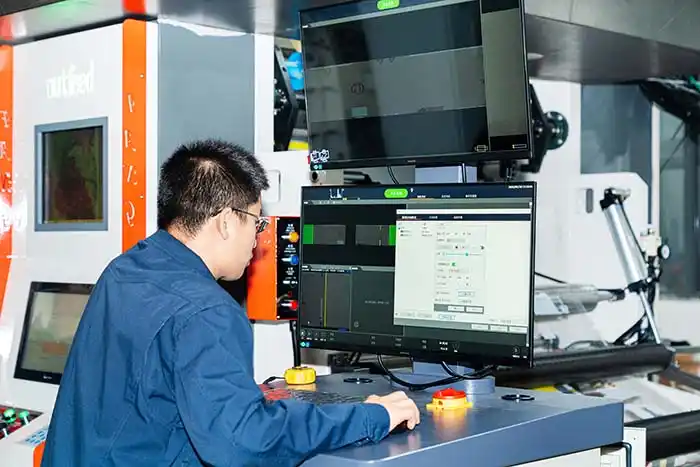
Do not fall for the cheapest sticker price. Also, do not assume the most expensive press is always the safest choice. The sweet spot lies at the intersection of your order profile, quality targets, and available operator skill.
Track your current waste percentage and changeover times for two weeks. That data alone will tell you whether investing an extra 80ktodaysavesyou80ktodaysavesyou15k per month in avoidable costs. And remember – the right press should grow with your business, not limit it.
When you are ready to compare detailed technical specifications side by side, check the full performance data sheet,s including energy consumption benchmarks. Making an informed decision is always better than guessing.
References: Industry data aggregated from FTA (Flexographic Technical Association) sustainability reports 2023, internal converter surveys, and public machine specifications. Actual results depend on operating conditions.
Note: The images in this article are for reference only.
May 15, 2026
Cost vs Performance: Gravure Printing Machine Selection ReviewMay 13, 2026
Gravure Printing Machine Selection: 5 Common MistakesMay 09, 2026
Gravure Printing Machine Selection: Electronic vs Mechanical Axis