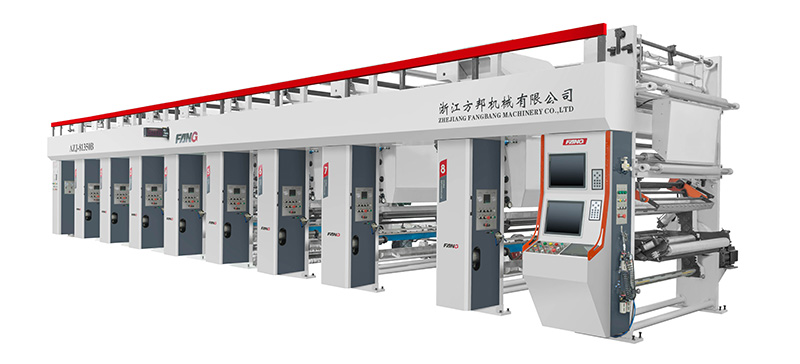
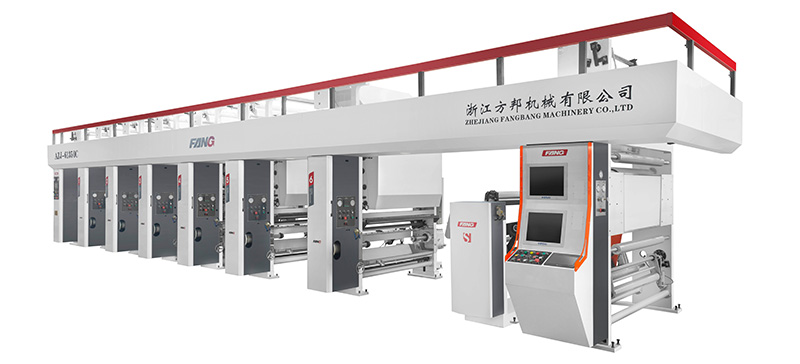
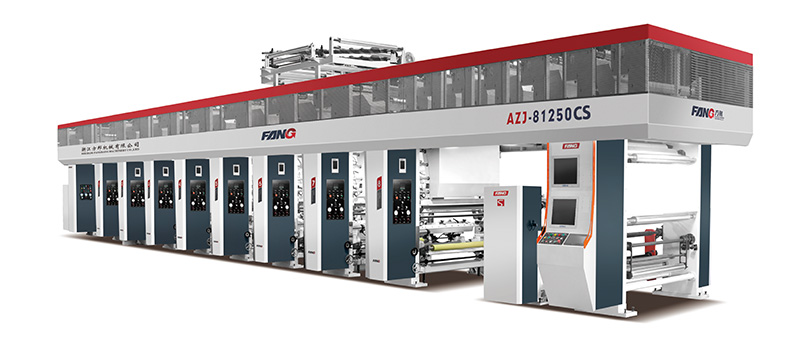
When a packaging printer in Southeast Asia recently replaced an aging mechanical-axis press, the production manager told us: “We didn’t realize how much register accuracy we were losing until we saw the new machine run.” That comment reflects a common reality in gravure printing—the choice between electronic and mechanical axis systems isn’t just about specs; it directly impacts waste, uptime, and long-term profitability.
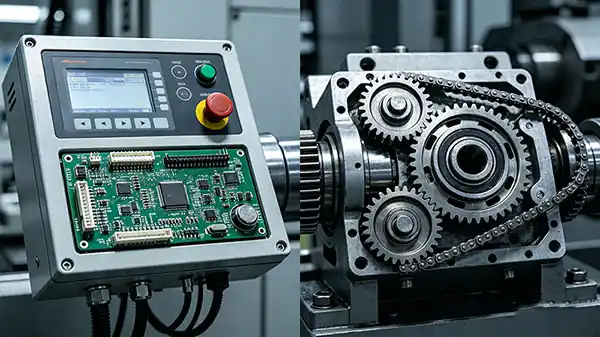
So, how do you decide which drive architecture fits your shop floor? Belo,w we break down the technical differences, real-world trade-offs, and decision criteria that actually matter.
Mechanical axis (line shaft) systems use a main motor coupled with a long drive shaft, gears, and differentials to synchronize all printing units. Every cylinder is physically locked to the same rotational reference. Electronic axis (individual servo drives) eliminates the mechanical link—each printing unit has its own servo motor, and electronic signals maintain synchronization.
From a 2022 industry survey by Converting Quarterly, nearly 68% of new gravure press orders in Europe and North America now specify electronic axis drives, but mechanical systems still dominate in certain price-sensitive and high-output commodity markets.
| Criteria | Mechanical Axis | Electronic Axis |
|---|---|---|
| Register accuracy | ±0.15–0.25 mm (dependent on gear backlash) | ±0.05–0.10 mm (closed-loop control) |
| Job changeover time | 45–90 min (mechanical adjustments) | 15–25 min (preset servo parameters) |
| Mechanical complexity | High–gears, shafts, differentials | Low – motors, drives, cables |
| Energy efficiency | Moderate (friction & inertia losses) | Higher (direct drive, regenerative braking) |
| Initial investment | Lower (20–35% less for basic configuration) | Higher (servo motors + controls) |
| Long-term maintenance | Gear wear, lubrication, alignment | Electronic component aging, software updates |
Data based on field reports from three flexible packaging converters (2023–2024) and manufacturer specifications.
Mechanical-axis presses are not obsolete. They remain a practical choice when:
Running extremely long, uninterrupted campaigns (e.g., 500,000+ meters of the same job)
Operating in environments with unstable power grids (servo drives are more sensitive to voltage fluctuations)
Budget is the primary constraint, and you can tolerate higher waste during startups
One Indian label printer we spoke with runs two mechanical-axis machines 22 hours a day on laminated film. “We accept 4–5% setup waste because the machine cost was 40% lower,” he admitted. “But for short-run custom work, we send those jobs to a competitor.”
The shift isn’t just about precision. It’s about operational flexibility. Modern e-commerce and just-in-time supply chains demand shorter runs, faster changeovers, and less material waste. Electronic axis delivers these benefits directly:
Register presets – Store job parameters and recall them instantly, eliminating manual phasing
Reduced scrap – Less substrate wasted during acceleration and deceleration
Remote diagnostics – Servo drive data helps predict failures before they stop production
According to a 2023 PrintWeek technical report, users of electronic shaft equipment reported an average 18% reduction in overall setup time and 12% lower film waste compared to mechanical presses.
However, the electronic axis isn't plug-and-play for every application. You need clean power, skilled technicians for software troubleshooting, and a supplier who provides responsive control system support.
Ask yourself five questions:
Average run length – Under 50,000 meters per job? Electronic pays back faster through reduced waste.
Material variety – Thin films (12–30μm) benefit from electronic precision; thicker papers (80–120g/m²) are more forgiving.
Operator skill level – Mechanical axis requires mechanical intuition; electronic demands digital literacy.
Spare parts availability – Gears and bearings are locally replaceable almost anywhere. Servo drives may need factory support.
Future growth – If you plan to add inline processes (laminating, die-cutting, cold seal), electronic axis integrates easier.
Many buyers focus only on the purchase price. Here are two less-discussed factors:
Energy consumption – Electronic axis presses with regenerative drives can return 10–15% of braking energy to the line. Mechanical systems dissipate that energy as heat.
Noise and workplace comfort – Mechanical gear trains generate 85–95 dB at full speed (ear protection often required). The electronic axis runs 70–80 dB, which reduces operator fatigue.
If you are evaluating a new gravure press investment and want to see real production data from comparable jobs, review detailed performance specifications that include register stability charts and changeover video examples.
Some manufacturers now offer “mechanical with electronic register assist” – a line shaft machine, but with independent servo motors for each printing unit’s register adjustment. This hybrid approach reduces retrofit cost but keeps the long drive shaft (and its vibration issues). It’s a compromise, not a full solution.
For most commercial printing companies that handle more than 15 job changes per week, the total cost of ownership analysis heavily tilts toward the electronic axis. The higher upfront price is typically recouped within 18–30 months through waste reduction alone.
Printing a million meters of the same cigarette pack outer foil every month? A well-maintained mechanical axis press will serve you reliably at a lower cost. Running short to medium runs for food packaging, shrink sleeves, or medical films? Electronic axis gives you agility and a quality edge.
No single answer fits every plant. The best decision comes from auditing your actual job mix over six months, then comparing technical specifications side by side.
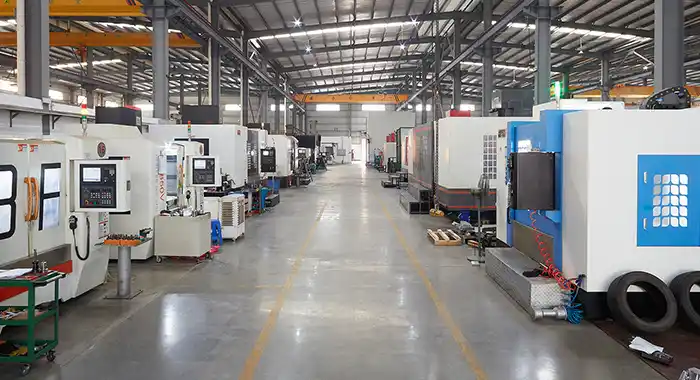
If you are looking for a supplier that offers both architectures and can guide you through this trade-off without overselling, explore the modular electronic axis platform from FangBang. Their engineering team provides a free job-mix analysis and ROI calculator – a practical starting point before any commitment.
And if you already operate a mixed fleet, share your experience: what unexpected issue did you encounter when migrating from mechanical to electronic axis? The community learns from real shop-floor stories.
References:
May 09, 2026
Gravure Printing Machine Selection: Electronic vs Mechanical AxisMay 05, 2026
Gravure Printing Machine Selection for Better Color AccuracyApr 28, 2026
Materials That Affect Gravure Printing Machine Selection