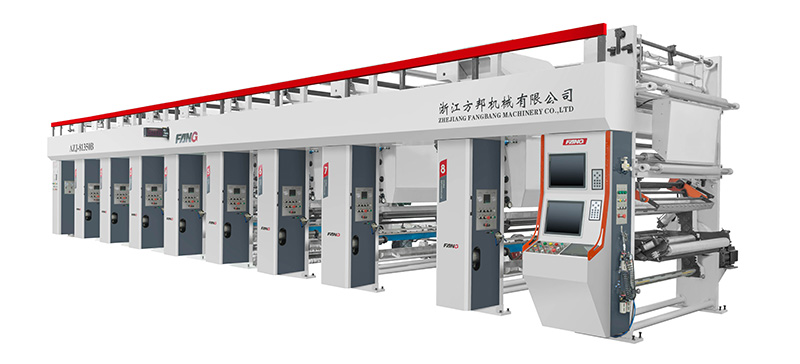
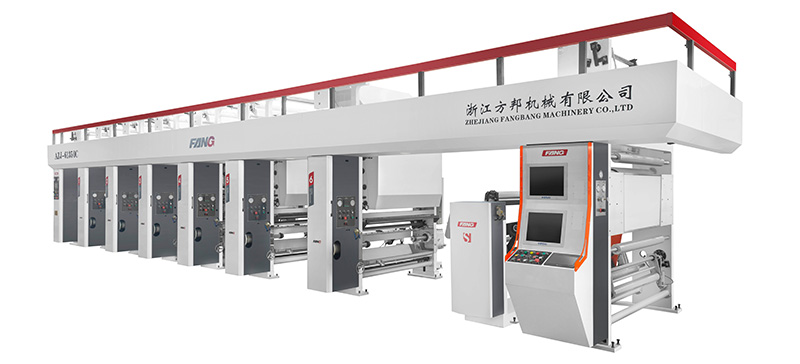
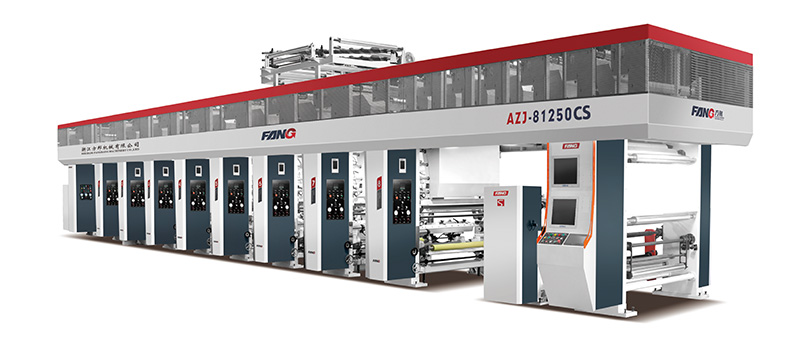
Late one night in a flexible packaging plant near Ho Chi Minh City, production manager Linh stared at two rolls of laminate, nearly identical to the naked eye. Under the proofing lamp, however, the brand’s signature crimson had drifted into a muddy brick red on the second roll — a Delta E shift of over 4.0. The ink supplier was the same, the viscosity charts were perfect, and the operator was one of her best. The culprit? A worn register compensator and a drying tunnel that couldn’t maintain temperature within a 3°C window at maximum speed. The claim that followed ate up $23,000 in reprints and late-delivery penalties.
Color inaccuracies in gravure work are rarely about a single variable. They are almost always a machine-integration problem. When you are evaluating equipment for high-stakes jobs — brand-sensitive flexible packaging, pharmaceutical blister foils, or decorative laminates — the selection of a gravure press becomes an exercise in precision engineering trade-offs. This article unpacks the specific machine attributes that govern color fidelity and provides a structured selection framework, so you can replicate what top converters do to keep Delta E numbers consistently below 1.5.
In digital printing, you can afford to tweak curves and reprint a few meters. In gravure, the cost of error is measured in engraved cylinders, solvent recovery overhead, and hundreds of kilos of multi-layer laminated waste. One major Southeast Asian converter revealed in an internal quality audit that 68% of its color-related claims traced back to mechanical factors — not ink formulation, not substrate variation. The study, which covered 18 months of production data, pinpointed four machine categories responsible for the bulk of deviation: register control loop stability, ink transfer consistency from chamber to cylinder, web tension fluctuation through the print units, and drying energy uniformity.
What makes machine selection so critical is that these four categories are heavily influenced by the press architecture you commit to at purchase. Retrofitting a poorly designed drying system, for instance, can cost 40% of the original machine price and still not match a purpose-built configuration. This means the decisions you make during specification review directly dictate your long-term color capability ceiling.
Most gravure press manufacturers quote a static register accuracy — commonly ±0.05 mm. However, the number that matters in production is dynamic longitudinal and lateral register hold under acceleration and splice events. When a press accelerates from 50 m/min to 300 m/min for a short-run job changeover, the register control system must compensate for web elongation, tension redistribution, and the inertia of massive cylinder assemblies. Many entry-level presses suffer from “settling time” lags of up to 15 seconds after a splice, during which color can wander visibly.
Ask suppliers to provide test charts showing dynamic register error at multiple speed ramp rates, and pay attention to whether the system uses a pre-register function that reads cylinder zero marks before the web enters the first printing nip. Advanced setups combine a digital shaft backbone with optical mark sensors on every unit, recalculating position every 25 microseconds. This closed-loop response effectively decouples color register from the mechanical phasing limitations of older line-shaft designs.
Key selection criteria:
Real-time register correction speed (microsecond-level vs millisecond-level response)
Behavior during automatic splice sequences — ask for demo videos at the maximum specified speed
Integration of pre-register and auto-preset functions to reduce start-up waste by up to 60%
After comparing these specifications, many engineers realize that real register performance is hidden deeper than the brochure number. If you want to see how different configurations handle these challenges in day-to-day flexible packaging and label applications, you may want to review application-specific setups that highlight multi-substrate versatility.
Ink transfer consistency across the web width is a direct contributor to color uniformity — and one of the most under-communicated machine selection criteria. Enclosed doctor blade chambers, now standard on high-end gravure presses, keep solvent evaporation to a minimum and maintain viscosity far more stably than open-pan systems. Yet the chamber’s internal geometry, blade material, and loading mechanism all influence the amount of ink that gets wiped off the cylinder cells in the land area.
A converter in Gujarat, India, who runs both solvent-based and water-based inks on the same 10-color press, discovered that swapping from a standard steel blade to a ceramic-tipped multi-layer blade, combined with a pneumatically dampened chamber loading system, reduced color fluctuation (expressed as standard deviation of density readings) by 37%. The chamber’s internal flow path also matters: symmetrical inlet-outlet designs prevent dead spots where pigment can settle and then suddenly release as a density spike.
What to evaluate:
Whether the chamber maintains internal pressure within ±0.05 bar across the full speed range
Blade oscillation stroke and frequency (typical values are 10–15 mm at 0.5–1 Hz, but must match cylinder runout)
Quick-change cartridge designs that allow a complete chamber swap in under two minutes, which is particularly valuable when running short batches of spot colors
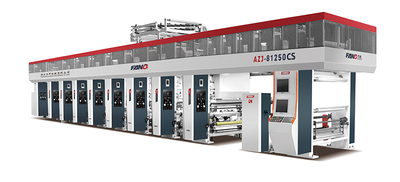
Drying heat must be precisely matched to the solvent system and the substrate’s thermal sensitivity. Too little heat, and residual solvent in the ink film leads to blocking and inter-color contamination; too high a temperature or air volume, and thin films like BOPP or 12-micron PET can stretch, shifting the dot area and altering color saturation. A well-designed drying hood actually delivers three things: high-velocity impingement air, exhaust that maintains the lower explosive limit (LEL) well below 25% per international safety practices such as NFPA 86, and temperature uniformity across the web width within ±2°C.
A technical paper presented at a Gravure Association conference noted that an under-designed dryer running at 90% of its thermal capacity often exhibits a temperature drop of 8–10°C between the center and the edges of a 1,300 mm wide web — enough to cause a visible hue shift in heat-sensitive cyan pigments. Top performers in the market integrate multiple independent nozzle zones and automatic exhaust rate adjustment based on continuous LEL monitoring, which also keeps energy consumption in check.
Print professionals are sometimes surprised to learn just how much tension fluctuations influence color appearance. A 5% tension spike on extensible substrates like LDPE reduces the film caliper just enough to alter the ink lay-down thickness, effectively making the print lighter. The gravure process, with its direct cylinder-to-web transfer, is particularly sensitive to this.
Selection hinges on the number of tension zones and the drive philosophy. A modern press for color-critical work should offer individual tension zones before and after each printing unit, not just between major sections like un-wind, print, and re-wind. Load cell feedback at multiple idler rolls, combined with servo-driven pull rollers, allows the tension to be profiled for each color station. For instance, you might run lower tension in the first units to accommodate moisture-laden paper and progressively higher tension downstream — preserving register without distorting color density.
Having looked at the four pillars of color-consistent gravure, how do you translate them into a concrete selection matrix? Use the table below to match your typical job profile to must-have and nice-to-have features.
| Job Profile | Register Priority | Ink Chamber & Blade | Drying Control | Tension Architecture |
|---|---|---|---|---|
| Brand-color flexible packaging (short runs, high repeatability) | Dynamic register with auto-preset; splice hold under 10 sec | Enclosed chamber with ceramic blade and pulse-dampened loading | Independent nozzle zones, LEL-controlled exhaust, ±1.5°C tolerance | Individual unit tension zones; load cell feedback profile |
| High-volume mono-material PE pouches | Solid register, single-color density stability | Large-capacity chamber with in-line viscometer | High-airflow compact hoods, energy recovery | Dual-zone with tapered tension for extensible films |
| Pharmaceutical foil printing (strict Delta E tolerances) | Absolute encoder feedback, pre-register at each unit | Hygienic chamber design, quick-drain for frequent wash-ups | Ultra-uniform infrared-assisted drying, HEPA-filtered air | Position control mode with active draw ratio compensation |
| Decorative paper and board (wide web, absorbent substrate) | Wide-web stability, edge-to-edge register | Automatic blade wear detection, oscillation cycle matched to cylinder | High-efficiency hot air with vapor removal capability | Multi-motor section control to handle paper caliper changes |
Use this matrix during your next machine evaluation round. Ask suppliers to provide evidence — not just data sheets, but logged data from identical configurations running comparable materials. Reputable manufacturers can show you job reports that include print-run density statistics, register error logs, and drying parameter trends.
After mapping your production requirements to these technical capabilities, many converters find that a modular configuration approach gives them the flexibility to tackle both short-run premium work and long-run commodity jobs without compromising color. It is at this stage that exploring modular designs built around these exact pillars can save you countless hours of cross-referencing spec sheets.
Even when individual components are well engineered, integration gaps can haunt you. Here are three traps observed across dozens of installations, shared by independent audit findings:
The “motor power is enough” fallacy. A press with ample kilowatt rating per unit may still suffer poor register if the digital drive’s processing latency doesn’t keep pace with high-speed transients. One U.S. converter found that a 20-year-old drive platform, despite being paired with modern servo motors, introduced a 4-millisecond signal delay that caused a 0.08 mm wobble at 350 m/min — entirely avoidable with a current-generation drive synchronization architecture.
Overlooking ink temperature conditioning. Ink viscosity is temperature-dependent. In plants without climate control, ink temperature can vary by 10°C between morning and afternoon. The best gravure lines incorporate a temperature-controlled viscometer loop that adjusts solvent addition dynamically, keeping viscosity within ±0.5 seconds in a Zahn cup. This level of control often halves the color variation seen in uncontrolled systems.
Insisting on unrealistically short crews. Fully automated machines reduce manual touchpoints, but color management still requires skilled oversight. During early production ramp-up, a shortage of trained operators often means the automatic spectral feedback loops are turned off, and the machine falls back to manual adjustments — a common source of early-life color complaints.
Beyond parts and specs, the ecosystem surrounding the machine matters profoundly. A reliable partner provides not just installation but application-specific calibration protocols, predictive maintenance insights based on component cycles, and rapid access to color measurement integration. If your next project demands a system where consistent color is designed into the machine architecture from day one, FangBang’s approach to integrated color management is worth serious consideration.
Investing in a gravure line is a decade-long decision. By prioritizing dynamic register, ink transfer stability, thermodynamic control, and intelligent tension management — and by avoiding the common traps outlined above — you build a foundation for color accuracy that no amount of post-press correction can replicate. The real payoff appears not in a specification table, but in the moment Linh’s successor can look at a 100,000-meter roll and see the exact crimson the client signed off on, every single meter.
May 05, 2026
Gravure Printing Machine Selection for Better Color AccuracyApr 28, 2026
Materials That Affect Gravure Printing Machine SelectionApr 23, 2026
Why Sleeve Tech Matters in Gravure Printing Machine Selection