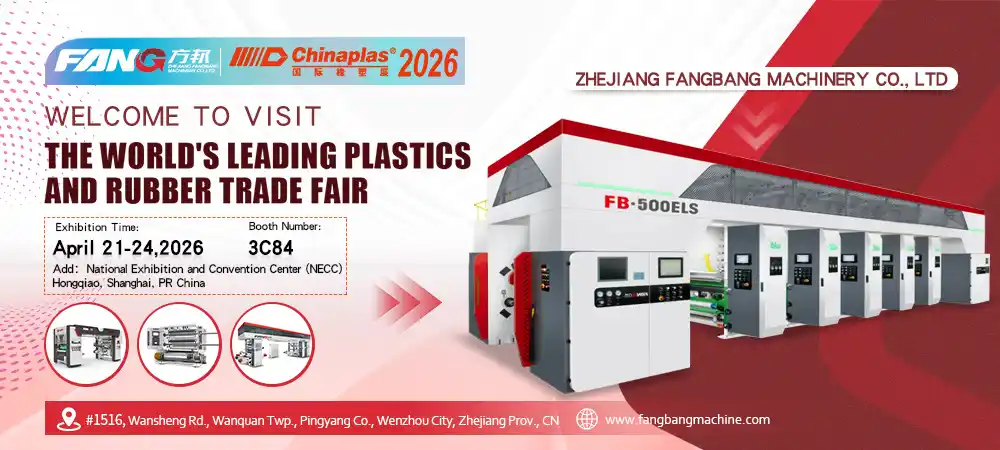
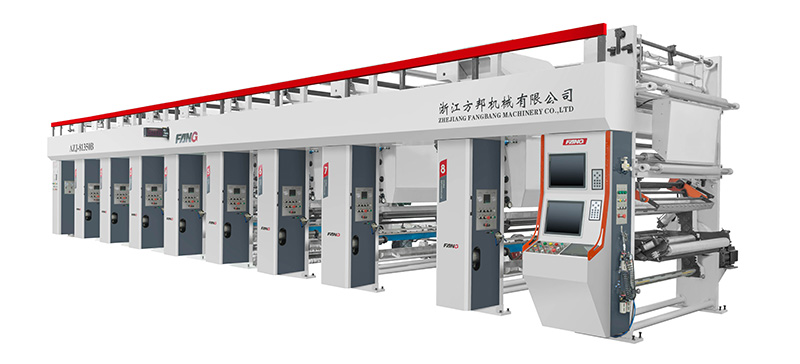
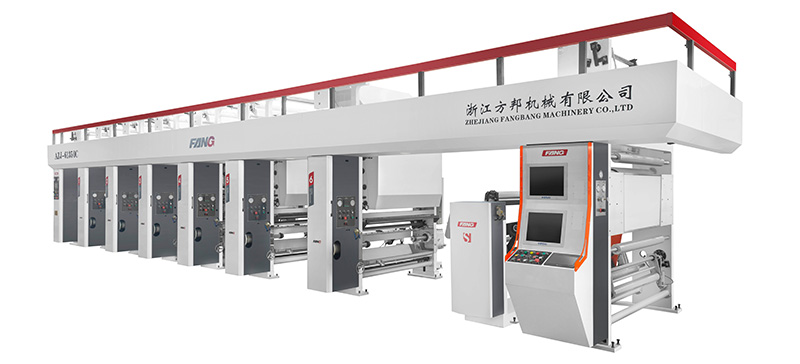
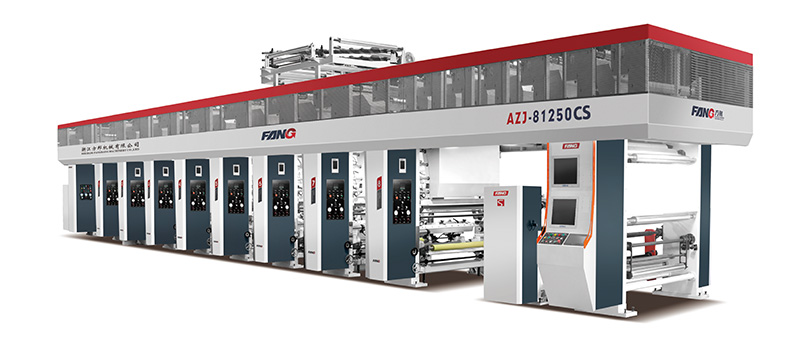
The quality problems on your packaging line — smeared ink on plastic films, inconsistent color on paper labels, or ink flaking off aluminum foil after forming — often trace directly back to a single root cause: material mismatch. When your Gravure Printing Machine struggles with adhesion, drying speed, or color consistency, the equipment itself rarely deserves the blame. The real culprit sits in the roll holder — the substrate material you're printing on. Ink systems, viscosity, surface properties of substrate materials, and dot structures on the cylinder are the four dominant factors determining print quality in gravure-based printing systems. Getting the machine right starts with getting the material right.
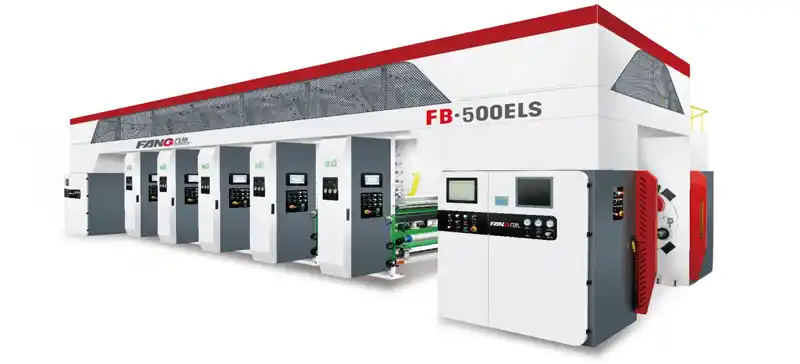
Walk through any converting plant today and you'll see operators quietly adjusting settings every time the material changes. Why? Because paper substrates, plastic films, and metal foils don't just sit differently — they react completely differently to the same printing conditions. Let me unpack what's actually happening:
Paper-based materials — think coated paper, kraft paper, and cardboard — are porous by nature. The ink soaks into the fibers through capillary action, creating a mechanical grip. Paper typically requires fast-drying inks to prevent bleed, with surface energy ranging from 35 to 45 dyne/cm. That's why water-based inks work beautifully on paper packaging and magazine inserts — the porous surface pulls the water into the fiber matrix, leaving pigment behind.
Plastic films — BOPP, PET, CPP, PE, PVC — tell a different story. These are non-porous, low-surface-energy materials. Untreated polyolefin films hover around 28–31 dyne/cm, which accounts for approximately 60% of adhesion failures in printing. That's not a guess; that's hard data from industrial failure analysis. Without corona treatment (bumping surface energy to 40–44 dyne/cm) or flame treatment (maintaining activity for 8–12 weeks), the ink simply won't stick — it sits on top like water on wax.
Metal foils present their own challenge — thermal stability. Aluminum foils need inks that survive forming processes without cracking, typically requiring heat resistance up to 160°C.
Here's where many packaging buyers make a costly mistake. They chase the lowest upfront price on equipment without modeling the total cost of ownership across their actual production mix.
This steady expansion reflects sustained demand from flexible packaging, décor printing, and publication sectors. Within this growing market, flexo remains the larger force today — but gravure is actually growing faster in the most rapidly expanding sectors: Asian packaging and industrial/functional printing.
Why the divergence? Cost structures. Industry benchmarks tell us that flexo printing delivers optimal cost efficiency for short to medium production runs — typically up to around 5 million impressions. Beyond that threshold — for ultra-long jobs exceeding 20 million impressions — the per-unit economics flip dramatically in favor of engraved-cylinder systems. Digital presses, on the other hand, excel at reduced waste and rapid turnaround, but per-unit cost climbs steadily for long runs compared with either conventional method.
But here's the nuance that factory managers often miss. A 320,000 flexopressmaylookmoreaffordablethana320,000flexopressmaylookmoreaffordablethana490,000 digital unit, but its five-year total cost of ownership can be 37% higher when you factor in hidden drains: plate costs averaging 84,000annually, solventrecovery at84,000annually, solventrecovery at22,000 per year, skilled labor premiums at 68,000/yr,and∗∗unplannedbearingreplacements costing68,000/yr,and unplannedbearingreplacements∗∗costing14,500 every 18 months. The real question isn't "which machine is cheaper" — it's "which machine aligns with my substrate mix and run-length distribution?"
Think about your own production floor. If you're running short-run jobs with frequent design changes — labels for craft beverages, seasonal packaging variants, promotional materials — flexo's lower plate costs and faster changeovers make compelling sense. A typical photopolymer plate costs a fraction of an engraved cylinder, and setup time runs in hours rather than days.
But what about high-volume stability? Solvent-based inks remain the most widely used in gravure-based printing for flexible packaging applications, offering excellent adhesion to non-porous substrates, high print quality with vibrant colors, and fast drying on high-speed presses — compatible with polyethylene, polypropylene, PET, and laminates. If your daily production consumes miles of BOPP or PET film and you demand color consistency across million-unit orders, the cost of cylinder engraving amortizes so thin it becomes negligible.
For paper-based packaging and environmentally sensitive applications, water-based inks are gaining serious traction. They offer low VOC emissions (typically containing a maximum of 30% solvents in the formula), safer operator environments, and cost-effective drying using heated air. The trade-off? Slower drying on non-porous substrates and lower chemical/abrasion resistance compared to solvent-based systems.
UV-curable inks represent the premium tier — instant curing, zero VOC emissions, exceptional gloss, and scratch resistance. They're ideal for rigid plastic packaging, metallized films, and premium labels, but require higher initial ink costs and UV curing equipment investment.
Let me walk through a clear comparison table reflecting actual industry operating parameters, compiled from multiple authoritative sources in the packaging sector:
| Decision Factor | Flexographic Press | Digital Press | High-Volume Engraved Cylinder Systems |
|---|---|---|---|
| Best run length | Medium to long (thousands to hundreds of thousands) | Short to medium (single units to thousands) | Very long (hundreds of thousands to millions) |
| Upfront tooling cost | Low to medium (photopolymer plates) | Very low (no plates) | High (engraved cylinders) |
| Setup time | Moderate | Minimal | Long |
| Substrate range | Very broad | Broad | Broad with proper ink selection |
| Print quality consistency | Good; improving with technology | Excellent for short runs | Highest continuous-tone quality |
| Changeover flexibility | High | Highest | Low |
| Amortization threshold | ~5M impressions | N/A (variable cost model) | ~20M+ impressions |
The decision framework is actually straightforward when you stop looking at machine price tags and start looking at your substrate mix and run-length distribution. Ask yourself:
Do I run more than 10 different SKUs per week? Flexo or digital wins on changeover speed.
Does my primary substrate require surface treatment for ink adhesion? Look for equipment with integrated corona or flame treatment stations.
Am I printing primarily on coated paper for food packaging? Water-based ink compatibility becomes your anchor requirement.
Do I need metallic effects or high-durability coatings for industrial applications? That pushes you toward UV-curable or specialty solvent ink systems.
Is my annual volume per design exceeding 30 million linear meters? The engraved-cylinder model becomes your most economical path.
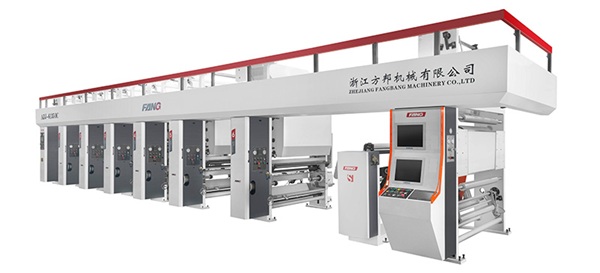
This is where thoughtful equipment design makes the difference. You don't need three different production lines for paper, film, and foil — not if your press is engineered for material-agnostic operation. The right system handles roll film materials including BOPP, PET, PVC, PE, aluminum foil and paper through intelligent tension control, adjustable drying profiles, and modular ink delivery that adapts to whatever runs through the machine.
When you're evaluating options, look for equipment with these specific material-handling features:
Shaftless cylinder loading — reduces setup friction when switching between different web widths and material stiffness levels
Electronic axis (servo motor drive) — maintains consistent tension whether you're running delicate 12-micron PET or heavy 80gsm kraft paper, with speeds reaching 300–500 meters/minute
Closed-type oven with automatic constant temperature system — critical for foils and thermal-sensitive films that can't tolerate overheating
Mid-tier manufacturers often offer more flexible customization for converters running diverse substrate portfolios — because their engineering teams are accessible and their modular platforms adapt to your specific material mix.
Customization isn't a luxury — it's a production necessity when your substrate list includes both 12-micron films and 400-micron boards. Off-the-shelf equipment from top-tier global brands often comes with fixed configurations that lock you into specific material parameters. The manufacturers truly serving packaging converters understand that your daily substrate rotation varies wildly — one order runs BOPP for snack packaging, the next runs aluminum foil for pharmaceutical blister packs, the next runs coated paper for retail display boxes.
That's where modular design philosophy changes the game. When your press is built with adjustable web tension range, programmable drying profiles for each color station, and quick-change doctor blade assemblies, you're not buying a machine — you're buying production flexibility.
But even the most flexible press needs an ink system that matches your substrates. Ask potential suppliers specific questions:
"What's your machine's lower tension limit for thin PET films without edge flutter?"
"Does your drying system allow separate temperature control for each printing unit?"
"How quickly can you swap between water-based and solvent-based ink systems if regulations change?"
The packaging industry doesn't stand still — and neither should your equipment strategy. By 2034, the market is projected to surpass $3.7 billion, driven by continued demand for high-quality, high-volume printed packaging. Companies that lock themselves into single-material machines risk losing bids on material-switch jobs. Those with adaptable systems win the contracts — plain and simple.
Start with your material inventory. Make a list of every substrate you printed last year. If films dominate — BOPP, PET, PE — prioritize equipment with electronic tension control and solvent-based or UV ink compatibility. If coated paper and board are your mainstay, water-based capability might save you significant compliance headaches. If you're dealing in specialty applications — decorative laminates, industrial films, or high-barrier food packaging — ask directly about customized plate cylinder engraving for fine details and consistent cell depth.
Then calculate your run-length economics. Pull your actual production data from the last 12 months. Map each SKU's annual volume against unit cost curves. If the majority of your jobs fall above 500,000 linear meters, you're in engraved-cylinder territory. If you're running hundreds of short jobs annually, flexo or hybrid configurations deserve serious consideration.
Three investments I've seen pay for themselves within 18 months on diverse-substrate lines: servo-driven electronic shaft systems (eliminate gear-marking on thin films), rapid-change doctor blade assemblies (turn 45-minute cleanups into 10-minute changeovers), and multizone drying with infrared and hot-air combination (dial in drying profiles per station — heavy coverage on one color, light coverage on another).
If you're ready to match equipment to your actual material portfolio — not the other way around — explore substrate-optimized press configurations designed for your specific production mix. Get detailed specs on modular drying systems for water-based and solvent-based compatibility.
Apr 28, 2026
Materials That Affect Gravure Printing Machine SelectionApr 23, 2026
Why Sleeve Tech Matters in Gravure Printing Machine SelectionApr 21, 2026
Petal vs CI Flexo: Which Prints Labels Better?