When a mid-sized flexible packaging converter in Southeast Asia replaced their aging press last year, they focused almost entirely on speed and color resolution. Six months after installation, however, their production manager confessed: “We should have asked more about spare parts availability and remote troubleshooting.” That realization is far too common.
Selecting a gravure printing press isn’t just about comparing cylinder circumference or drying capacity. The real differentiator – the one that determines uptime, maintenance costs, and operator sanity – is the service ecosystem that wraps around the hardware. This guide walks you through the key evaluation dimensions, common blind spots, and how to align your choice with a full lifecycle service strategy.
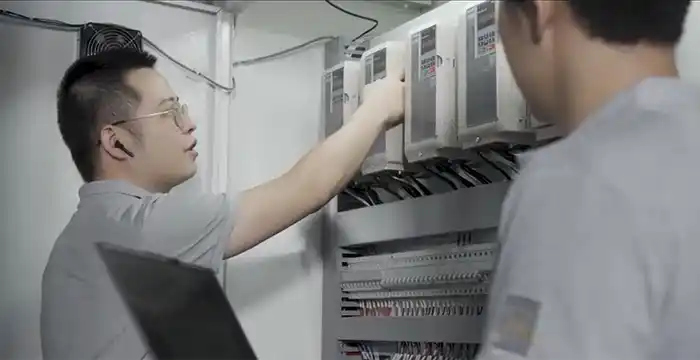
Most suppliers happily talk about post-sales support, but the depth varies wildly. A genuine lifecycle service covers four phases:
Installation & commissioning – Including on-site alignment, test runs with your substrates, and baseline performance documentation.
Operator training – Beyond basic controls, covering routine diagnostics, registration troubleshooting, and dryer tuning.
Preventive maintenance & spare parts – Scheduled remote health checks, guaranteed response times for critical components (e.g., doctor blade holders, electronic cards), and local stocking options.
Continuous improvement – Retrofits for automation upgrades, energy-saving modifications, and remote performance audits.
The industry standard ISO 12647-4 sets quality benchmarks, but no ISO dictates how a supplier handles your second-year breakdown. That’s where you need to ask specific questions.
Instead of getting lost in spec sheets, evaluate potential suppliers across these practical axes:
| Dimension | Basic offering (minimal service) | Full lifecycle approach |
|---|---|---|
| Response time | 72-hour email reply | 2‑hour remote diagnostic, next‑day onsite (region dependent) |
| Spare parts guarantee | Standard catalog, 4‑week lead time | Critical parts stocked for 10+ years, 48‑hour express |
| Operator re‑training | One‑time initial session | Annual refresher + e‑learning modules |
| Upgrade path | None (buy new press) | Modular retrofits for register control, drying efficiency, or automation |
From conversations with plant managers, the most overlooked factor is documentation quality. Does the supplier provide detailed hydraulic diagrams, PLC ladder logic access, and video troubleshooting guides? One European converter reduced mean-time-to-repair by 40% simply because their press vendor offered a searchable digital parts catalog.
A lower-capital press might save you $50,000 upfront, but if its drying system consumes 30% more energy and spare parts take eight weeks, you lose that saving in the first 18 months. Always request a 5-year total cost of ownership (TCO) estimate, including energy, consumables, and predicted downtime.
Post-pandemic, many suppliers now offer augmented reality (AR) support – a technician can see what your operator sees via smart glasses. This cuts travel costs dramatically. Ask for a demo of their remote diagnostic portal before signing.
Send a “dummy” technical question to each shortlisted vendor. How fast do they reply? Is the answer specific or generic? One packaging plant used this trick and eliminated two suppliers who took five days to respond about a simple doctor blade pressure query.
If you run three shifts, your support should too. Standard business-hour coverage is insufficient. Look for:
24/7 hotline with real engineers (not a call center script)
On-site response commitments aligned to your geography (e.g., “within 8 hours for major cities”)
Predictive maintenance alerts – some modern presses log vibration and temperature data to flag bearing wear before failure
According to a 2024 survey by Printing Packaging Insights, 68% of unplanned downtime in gravure lines is traceable to issues that could have been prevented with proactive service monitoring. That’s not a machine problem; it’s a service gap.
Use this when evaluating any supplier:
Does the supplier publish their spare parts price list online? (Transparency indicator)
Are service level agreements (SLAs) customizable by component criticality?
Can they provide reference calls from customers with similar press age and substrate mix?
Is remote screen sharing included at no extra cost?
What is the average lifespan of their electronic boards (e.g., drivers, I/O modules) – and are they still available for a machine purchased 8 years ago?
If a vendor hesitates on any of these, consider it a red flag.
The technical specifications of a press – its maximum web width, printing speed, or register accuracy – are table stakes. What transforms a good machine into a long-term asset is the confidence that when something drifts out of spec at 2 AM on a Sunday, someone knowledgeable will answer.
That’s where understanding the manufacturer’s internal service culture becomes critical. Some suppliers treat after-sales as a cost center; others build their brand reputation around lifecycle partnerships.
If you’re currently comparing options and want to see how a structured lifecycle program is documented in practice, review the technical service framework from one established provider. It includes examples of preventive maintenance schedules, remote diagnostic workflows, and modular upgrade paths that have been field-tested across multiple continents.
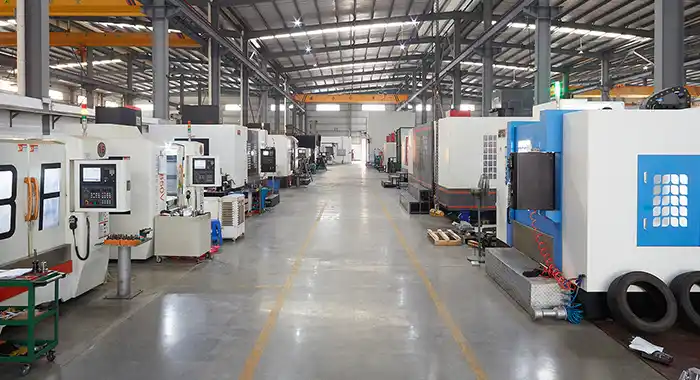
Before signing any purchase order, sit down with your night-shift lead operator and ask: “What’s the most frustrating non-machine issue you face when a press acts up?” The answer – often about unclear documentation, delayed parts, or unreturned calls – will tell you exactly what kind of service you truly need. Then choose a press partner who solves that, not just who prints the prettiest sample.
May 25, 2026
Gravure Printing Machine Selection: How Registration WorksMay 22, 2026
Flexible Packaging? Gravure Printing Machine Selection TipsMay 19, 2026
Gravure Printing Machine Selection That Cuts Energy 20%