A foreman, his fingernails stained with grease, his eyes reflecting decades of experience, patted the side of the massive, roaring machine. "This old workhorse," he shouted over the noise, "is the reason those candy wrappers your kids fight over look so beautiful." Then he pointed to a newer, sleeker machine nearby, its operation much quieter, a symphony of digital hums and precise mechanical clicks. "But," he said, a touch of awe in his voice, cutting through the industrial din, "that electronic gravure press is the future. It's not just printing; it's engineering precision." In that moment, I truly grasped the shift from purely mechanical equipment to intelligent electronic gravure printing systems. If you're looking for the key advantages of choosing an electronic gravure press, the core answer is this: they perfectly combine the superior quality of gravure printing with the precision, reliability, and operational intelligence of the digital age, ultimately providing an exceptional return on investment for high-volume, demanding printing applications.

Before we dive into the "electronic" advantage, we must understand why the rotogravure process itself remains king for so many applications. Unlike methods that transfer ink from a raised (flexo) or flat (offset) surface, rotogravure printing machines work from an engraved recess. The cylinder engraving, etched with microscopic cells, holds the ink. This simple physical principle yields profound benefits. It allows for a tremendous ink laydown, producing vibrant, saturated colors that seem to jump off the substrate. Think of the metallic sheen on a premium coffee bag or the photorealistic fruit on a juice box—that’s gravure printing in its element. The direct engraving also enables exceptionally fine detail reproduction and consistent color across astronomical print runs. Once that printing cylinder is perfected, it replicates the same image, hour after hour, kilometer after kilometer, with almost no degradation. This inherent durability and consistency is the bedrock upon which electronic enhancements build their empire.
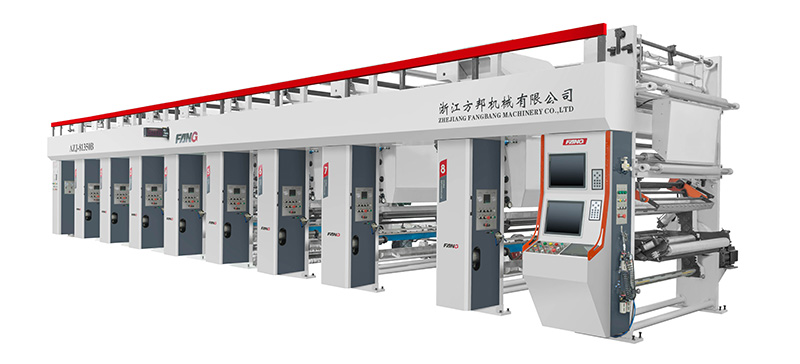
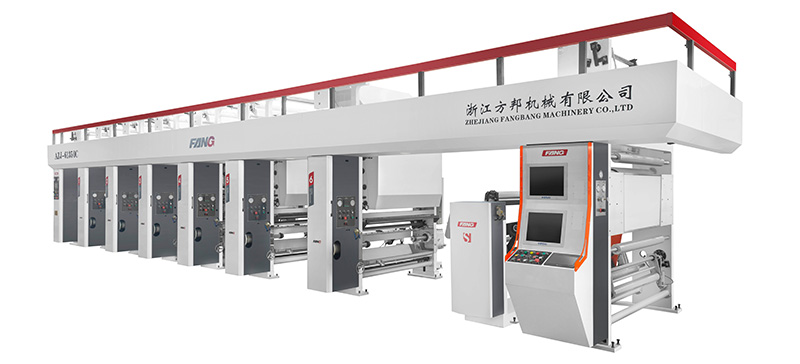
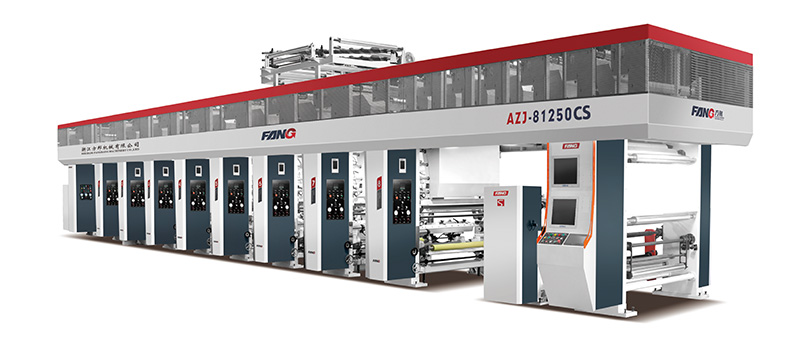
So, what transforms a traditional gravure printing system into a modern electronic rotogravure press? Imagine replacing analog gauges with a central nervous system. The heart of the machine—the engraved cylinder—remains. But everything that controls, manages, and supports it becomes digitally integrated.
The most significant leap is in automated registration and tension control. Older machines required operators with almost mystical skill to manually adjust web tension and print registration, watching for minute drifts. Modern electronic rotogravure printing machines use digital optical sensors and servo-driven mechanisms to maintain perfect alignment and tension autonomously. I recall a client running a fragile, metallized film for luxury chocolate bars. With their previous press, web breaks and misalignment were a costly nightmare. After switching to a FangBang press with its proprietary FangBang DigiTension™ system, their waste percentage plummeted. The machine "felt" the substrate's stress and adjusted in milliseconds—a feat impossible for human hands.
Furthermore, electronic integration brings precision to ink dispensing and viscosity control. Solvent-based inks, common in gravure, are sensitive to environmental changes. Automated systems now continually monitor and adjust viscosity, ensuring the color strength and drying characteristics remain constant from the first to the ten-thousandth impression. This isn't just about convenience; it's about eliminating entire categories of waste and quality variance.
This leads us to the first colossal advantage: legendary efficiency for continuous production runs. If your business involves printing millions of meters of packaging film, label stock, or wallpaper, the electronic rotogravure machine is your undisputed champion. Its design is inherently linear and fast. The web flows in a straight path from unwinder to rewinder, allowing for higher speeds with lower stress on the material compared to sheetfed or complex-path presses.
But the electronic layer supercharges this. Consider predictive maintenance. A traditional machine might run until a bearing fails, causing hours of downtime. An intelligent electronic rotogravure press from a brand like FangBang monitors vibration, temperature, and load on critical components. It can alert your team that a motor drive is working 10% harder than usual, suggesting inspection before it fails. This shift from reactive to predictive maintenance transforms overall equipment effectiveness (OEE). A 2022 report by Grand View Research highlighted that integrating IoT-based monitoring in industrial printing equipment can reduce unplanned downtime by up to 30%. That’s not just a number; it’s nights and weekends your maintenance crew gets back, and it’s orders shipped on time.
For brand managers, the choice of printing technology is a choice about brand integrity. The superior print quality of rotogravure is not a mild preference; it's a strategic weapon in crowded markets. The deep, vivid colors and ability to handle exquisite gradients make it ideal for high-end packaging—think cosmetics, spirits, and gourmet foods where shelf appeal is the final, silent salesperson.
The electronic element elevates this further. Advanced cylinder engraving techniques, like laser etching guided by digital artwork files, create cells with astonishing precision and varying depths. This allows for sophisticated tonal reproduction, making even subtle skin tones or soft shadows in a photograph appear flawless on a flexible substrate. I've seen side-by-side comparisons of the same flexible packaging design printed on different technologies. The rotogravure sample always has a depth and richness that others struggle to match—the blacks are truly black, the solids are perfectly uniform without banding. When a global confectionery brand mandates that the red on their flagship bar wrapper must be exactly Pantone 186C, everywhere in the world, they are implicitly mandating a gravure printing system.
A common misconception is that rotogravure printing machines are inflexible. The opposite is true. Their versatility with diverse printing substrates is astounding. This capability stems from the separation of the image carrier (the cylinder) from the ink formulation and drying system. Whether you’re printing on:
Thin, delicate films for snack bags.
Heavy, opaque paperboard for cartons.
Metallized or treated surfaces for technical labels.
Non-woven fabrics for decorative applications.
A well-configured electronic rotogravure press can handle it. The key is the electronic press’s ability to finely tune every parameter—ink viscosity, dryer temperature, web tension—for each unique material and store that "recipe" for instant recall. FangBang engineers often speak of "teaching" the machine a new substrate. They run trials, the system's sensors collect data on how the material behaves, and an optimal profile is created. Next time that job runs, the operator simply selects "Premium PET Gloss Film - 36 microns," and the machine configures itself. This turns material versatility from a theoretical spec into a practical, daily tool for printers serving multiple industries.
Here’s a perspective often lost in technical datasheets: the most advanced electronic rotogravure printing machine is only as good as the team behind it. This is where the human element, the "expert" part of my title, becomes critical. Choosing a supplier is a long-term marriage, not a one-night stand.
The advantage of partnering with an innovator like FangBang isn't just access to a reliable heavy-duty rotogravure machine for packaging. It’s the embedded knowledge. It’s the application engineers who’ve seen a hundred different laminates and adhesives. It’s the service technician who can diagnose a complex register drift from a thousand miles away via a secure data link. True customized rotogravure solutions don’t start with a sales quote; they start with a conversation about your nightmares—your stickiest substrates, your most demanding brand client, your tightest deadline. The machine then becomes the tool engineered to solve those specific problems. I advocate for a mindset shift: you’re not buying a press; you’re investing in a production continuity partnership.
Let’s tackle the elephant in the room: environmental impact. Historically, solvent-based inks and their volatile organic compound (VOC) emissions were a significant challenge. The industry has responded forcefully. Modern electronic rotogravure printing machines are at the forefront of this change. They are designed to work seamlessly with advanced ink systems, including water-based and high-solid-content inks that drastically reduce VOC emissions.
Moreover, the precision of electronic control is inherently less wasteful. Exact ink dispensing means less leftover ink to manage. Perfect tension and registration control mean drastically reduced substrate waste at startup and during runs. Superior consistency means fewer rejected batches. When you view sustainability as a measure of resource efficiency—ink, energy, substrate—the modern electronic rotogravure press makes a compelling case. It enables you to produce more brilliant print with a smaller environmental footprint, a powerful message for your own customers.
Ultimately, every capital equipment decision boils down to ROI. The upfront cost of an electronic rotogravure press can be significant. However, the total cost of ownership story is where it wins. We must calculate beyond the invoice:
Material Waste Reduction: Electronic controls can cut makeready and running waste by 40-50% compared to manual machines.
Labor Optimization: One operator can often manage what used to require two, focusing on supervision rather than constant adjustment.
Downtime Minimization: Predictive maintenance and robust construction keep the machine producing revenue.
Quality Premium: The ability to command higher prices for superior work and secure contracts with quality-conscious brands.
Energy and Consumable Efficiency: Modern dryers and pumps are more efficient, and precise ink use lowers costs.
Over a typical 5-7 year depreciation period, the difference in operational efficiency often far outweighs the initial price differential. The machine becomes not an expense, but a profit center defined by its relentless, high-quality output.
The journey from that loud, charismatic old press to today’s intelligent electronic rotogravure printing machines is a story of evolution, not revolution. The soul of gravure—its profound quality and robustness—remains intact. But its body has been enhanced with a digital nervous system, granting it precision, awareness, and efficiency our foreman from the 2000s could only dream of.
If your mission is to dominate in markets where visual impact, unwavering consistency, and material versatility are paramount, then the question isn't whether to choose rotogravure, but how modern your rotogravure printing system should be. The advantages are clear, tangible, and ready to be harnessed.
Ready to see how an intelligent electronic rotogravure solution can transform your production line? Don't just buy a machine; build a capability. [Contact the FangBang engineering team today for a personalized, no-obligation analysis of your printing challenges and opportunities].
May 28, 2026
Gravure Printing Machine Selection – Don’t Ignore After-SalesMay 25, 2026
Gravure Printing Machine Selection: How Registration WorksMay 22, 2026
Flexible Packaging? Gravure Printing Machine Selection Tips